Early in my career, I saw successful people working hard, saving consistently, and relying on experienced financial professionals—yet costly mistakes were still happening.
Not because they lacked good advice.
Because their advisors weren’t working together.
That realization changed the direction of my career—and became the foundation of LBT Wealth Management.
I remember recommending a tax strategy to a client that I believed could make a meaningful difference.
“Let me run it by my accountant.”
At first, the response seemed perfectly reasonable. Then it hit me: the accountant had not been part of the planning conversation. They did not know why the strategy had been recommended or how it fit into the client’s broader retirement plan.
Even sound advice could fail if it wasn’t implemented correctly—or properly reflected on the tax return.
Expertise wasn’t the problem. Coordination was.
That moment changed how I thought about retirement planning.
Over time, I saw the same pattern: a financial advisor recommended a sound strategy, but the tax preparer was never brought into the conversation.
By April, the return did not reflect the planning—and clients were left correcting a problem that could have been prevented months earlier.
That is why I established LBT Tax Services alongside LBT Wealth Management. For clients who engage the tax practice, tax preparation creates a direct connection between planning, implementation, and reporting—so the strategy is not lost between recommendation and tax filing.
At LBT Wealth Management, thoughtful tax planning is one of the most powerful ways I can help clients preserve more of what they have built. Over time, cumulative tax savings may be as meaningful as—and sometimes greater than—the benefit of incremental investment returns.
I created LBT Tax Services to provide LBT Wealth Management clients with a more connected level of service. Many financial advisors identify tax considerations but stop short of providing specific tax advice or preparing tax returns.
Many of the decisions people make as they approach and move through retirement carry tax implications. That includes when to claim Social Security, how to generate retirement income, whether to convert to a Roth IRA, how to structure investment withdrawals, how income may affect Medicare premiums, and how assets eventually pass to the next generation.
That is why tax planning cannot be limited to a once-a-year conversation after financial decisions have already been made. It must be part of the retirement conversation before those decisions are made.
Tax preparation helps close that loop. For clients who separately engage LBT Tax Services, the planning conversation can continue through implementation and tax preparation—helping keep the strategies discussed during planning aligned with how they are ultimately reported on the tax return.
That focus on taxes reinforces a broader truth: if taxes touch nearly every retirement decision, those decisions cannot be planned in isolation.
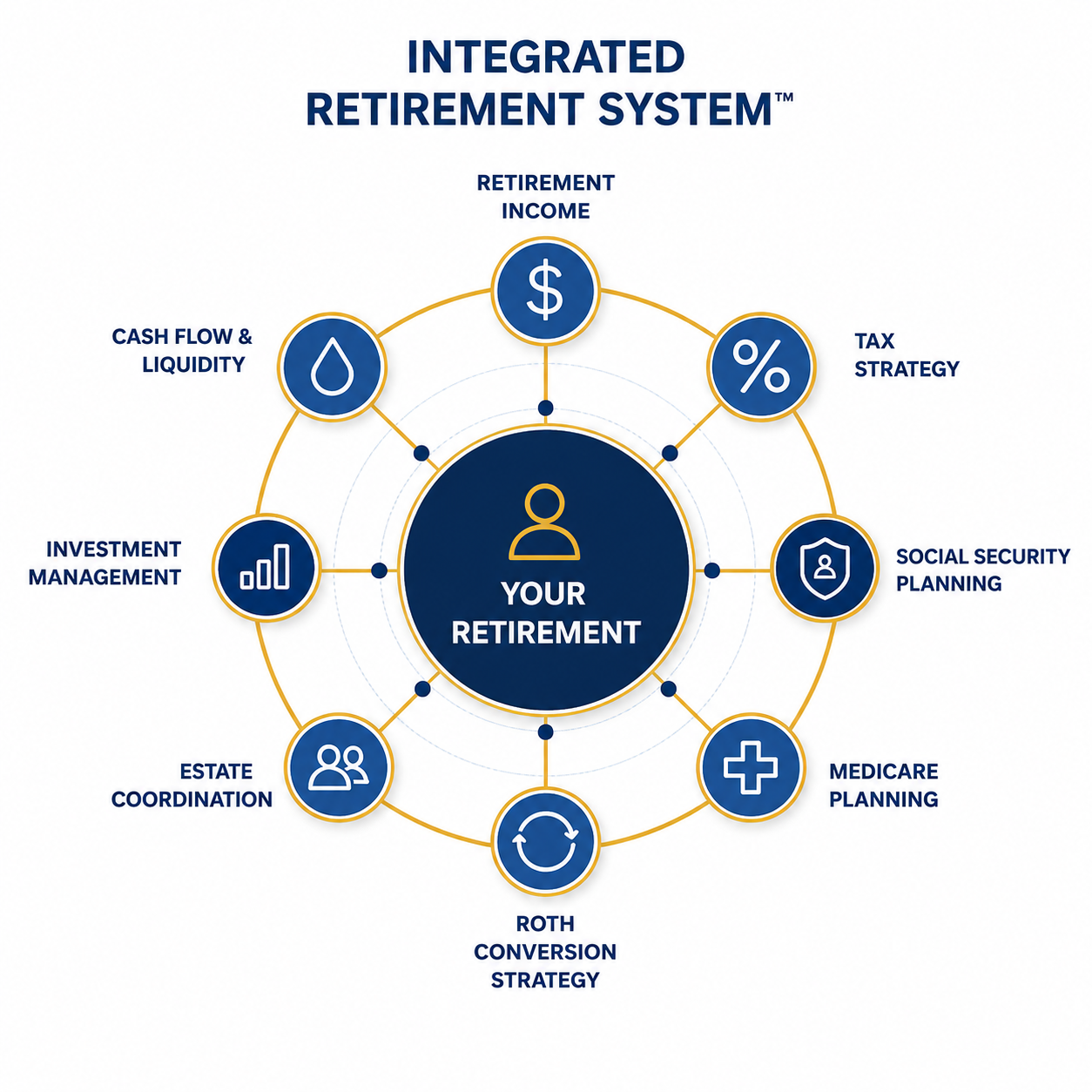
It is why LBT Wealth Management is built around Integrated Retirement Planning—bringing retirement income, lifetime tax strategy, investment management, cash flow and liquidity, Social Security, Medicare, Roth conversions, and estate coordination into one coordinated strategy.
The goal is not simply to reduce taxes this year or earn more from a portfolio. It is to make every important decision work together—so clients can preserve more of what they have built and use it to support the retirement they want.
People sometimes ask why I have pursued so many professional designations. The answer is simple: retirement rarely presents a one-dimensional problem.
Every decision can touch investments, retirement income, taxes, healthcare, and estate planning. I continue studying across these areas because understanding how they connect helps me identify blind spots that a narrower approach may miss.
Tax laws change. Markets change. Retirement rules change. Healthcare changes. My commitment is to keep learning so the guidance I provide evolves with the decisions my clients face.
Financial planning is most meaningful when it begins with understanding the people behind the numbers. I work with a select group of individuals and families so I can take the time to understand what matters to them, what concerns them, and what they want their retirement to make possible.
That creates a different kind of advisory relationship—one built on continuity, open communication, and genuine care. Over the years, many client relationships have grown into real friendships. I consider that one of the most meaningful parts of this work.
I am not trying to build the biggest advisory firm. I am building a practice where clients feel known, supported, and confident that their financial life is being considered as a whole.
Because financial planning is personal. It should never feel transactional.
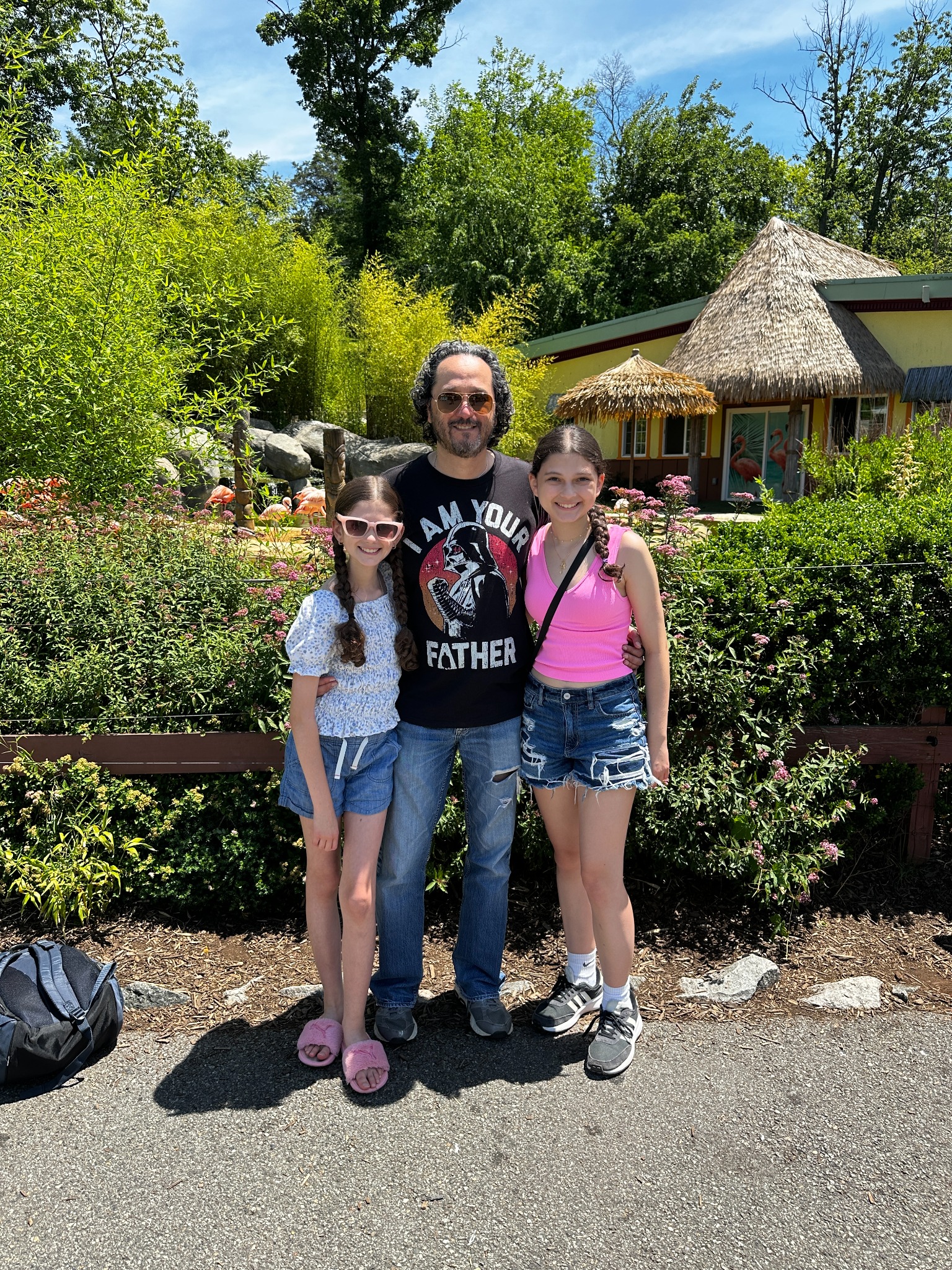
Outside the office, I am first and foremost a father to my teenage daughters, Isabella and Liliana. We live in a small waterfront community in South Amboy, New Jersey, where home, family, and time together keep me grounded.
Being their father has shaped how I think about responsibility, patience, and the future. It is also a constant reminder that financial planning is never really about numbers alone. It is about protecting the people we love and creating more freedom to spend time with them.
When I am not working or spending time with my girls, I enjoy playing golf and am learning how to sail. I am also a lifelong Star Wars fan—and yes, I take it seriously enough to wear the shirt.
The real goal is helping people live the life they have worked so hard to build.
Thank you for taking the time to learn about me and our philosophy. Choosing a financial advisor is an important decision, and I believe it starts with a conversation.
If our approach resonates with you, I’d welcome the opportunity to learn your story and see if we’re the right fit for one another.
During your Integrated Retirement Review, we’ll evaluate how your investments, taxes, retirement income, Medicare, Social Security, and estate planning work together—and identify opportunities to improve coordination before costly mistakes become permanent.