
Black couple in their early retirement years walking together outside a contemporary home

Social Security Planning

Your Claiming Age Is Only Part of the Decision.

Social Security is a household retirement-income decision. It can shape your taxes, Medicare premiums, portfolio withdrawals, longevity protection, and the benefits available to a surviving spouse.

The right claiming strategy begins by understanding how these decisions work together across your broader retirement plan.

Schedule Your Integrated Retirement Review

Eyebrow

More Than a Monthly Check

A Higher Benefit Is Not the Only Measure of a Better Decision.

The objective is not to optimize one number. It is to make Social Security work within the life you are planning. Income needs, tax opportunities, longevity, and protection for a surviving spouse can all influence the decision.

What Many People Focus On
$
Monthly Benefit
Only One Part of the Decision
What the Decision Must Support
Income Needs
Tax Opportunities
Longevity
Survivor Protection
The Better Question
What claiming strategy best supports your overall retirement?

Spacing

Factor
Question
The Social Security Decision Lens™

One Claiming Decision. Four Planning Consequences.

We examine how a claiming strategy affects income today, the tax-planning window before benefits begin, reliable income later in retirement, and survivor protection.

Your Claiming Decision
How one decision shapes retirement
01
Income Today
How retirement is funded before benefits begin
02
Tax-Planning Window
How withdrawals and Roth conversions may fit
03
Income Later
How reliable lifetime income may change
04
Survivor Protection
What income may remain for a spouse
One decision. Consequences across retirement.

The Household Decision

A Claiming Choice Can Outlive the Person Who Makes It.

For married couples, the analysis should extend beyond each person’s individual benefit. The sequence of claims can affect household income while both spouses are living and the income available after the first death.

The Household Income Path
One household. Three income realities.
01
Before Claiming
Coordinate the sequence of claims and the income used while waiting.
Spouse A
Spouse B
02
Both Spouses Living
Two benefit decisions help shape combined household income.
Benefit A
Benefit B
03
Survivor Years
Household Social Security income can change after the first death.
Continues
Ends
A claiming choice made today can shape the income available to a surviving spouse later.

Questions We Help You Evaluate

The Right Claiming Decision Depends on the Questions Behind It.

Every situation is different. We help you evaluate the tradeoffs between income now, income later, taxes, Medicare, and household protection.

01
Should You Claim Early?
Claiming before full retirement age may provide income sooner, but it can also permanently reduce your monthly benefit.
02
Should You Delay?
Waiting may increase future benefits, but it also requires a strategy for generating income during the delay.
03
How Does This Affect Your Taxes?
Depending on your income, a portion of your Social Security benefits may become taxable. Your withdrawal strategy and other income sources matter.
04
How Does This Affect Medicare?
The timing and structure of retirement income can influence Medicare premiums through income-related adjustments (IRMAA).
05
What About Your Spouse?
A claiming decision may affect survivor benefits and your household’s lifetime retirement income. Planning together is often more valuable than making two independent decisions.
From Questions to Strategy

We Test the Strategy Against Your Retirement—Not a Generic Rule

We evaluate these tradeoffs together—not one at a time—to determine how the claiming strategy fits with the rest of your retirement.

The LBT Strategy Test
Six questions. One coordinated decision.
Proposed Social Security Claiming Strategy
01
Cash Flow
Does household income work before and after benefits begin?
02
Lifetime Taxes
How could timing affect taxes and Roth-conversion opportunities?
03
Medicare & IRMAA
Could income changes affect future Medicare premiums?
04
Portfolio Withdrawals
How will investments fund the years before claiming?
05
Spousal & Survivor Benefits
How might the choice affect household and survivor income?
06
Longevity & Family
Does the strategy reflect health, longevity, legacy, and family priorities?
The Result
A claiming strategy coordinated with the rest of retirement.

Common Mistakes We Help Clients Avoid

Avoiding Mistakes Requires Looking Beyond the Benefit Itself.

There is no universally wrong claiming age. Problems often begin when a permanent decision is made without testing how it affects the rest of retirement.

Common Mistake
Coordinated Planning Response
01
Common Mistake
Claiming without considering lifetime tax implications
Coordinated Planning Response
Evaluate Social Security alongside taxable income, withdrawals, and Roth conversions.
02
Common Mistake
Overlooking spousal or survivor strategies
Coordinated Planning Response
Model the decision across both spouses’ lifetimes, including the survivor years.
03
Common Mistake
Drawing from retirement accounts inefficiently while delaying benefits
Coordinated Planning Response
Coordinate bridge income with portfolio withdrawals and lifetime tax planning.
04
Common Mistake
Missing opportunities during lower-income years
Coordinated Planning Response
Review Roth conversions and other tax-planning opportunities before benefits begin.
05
Common Mistake
Treating Social Security as an isolated decision
Coordinated Planning Response
Test the strategy against income, taxes, Medicare, investments, and family priorities.
Our Philosophy

There Is No Universally “Best” Claiming Age.

Sometimes claiming earlier may support the plan. Sometimes waiting may strengthen later income or survivor protection. The appropriate choice depends on how the tradeoffs fit with the rest of your retirement.

Two Potentially Appropriate Paths

Different choices can support different retirement strategies.

01
Potential Path

Claim Earlier

May provide income sooner and reduce reliance on portfolio withdrawals.

Income Sooner
Bridge Income
Health & Longevity
OR
02
Potential Path

Delay Benefits

May increase future monthly income and strengthen survivor protection.

Higher Future Benefit
Survivor Protection
Tax-Planning Window
The Better Standard
The appropriate choice is the one that fits the full retirement strategy.

Integrated Retirement Planning

Social Security Is One Strategy Within a Coordinated Retirement Plan.

We evaluate Social Security alongside retirement income, lifetime taxes, Roth conversions, investment management, Medicare planning, and estate coordination.
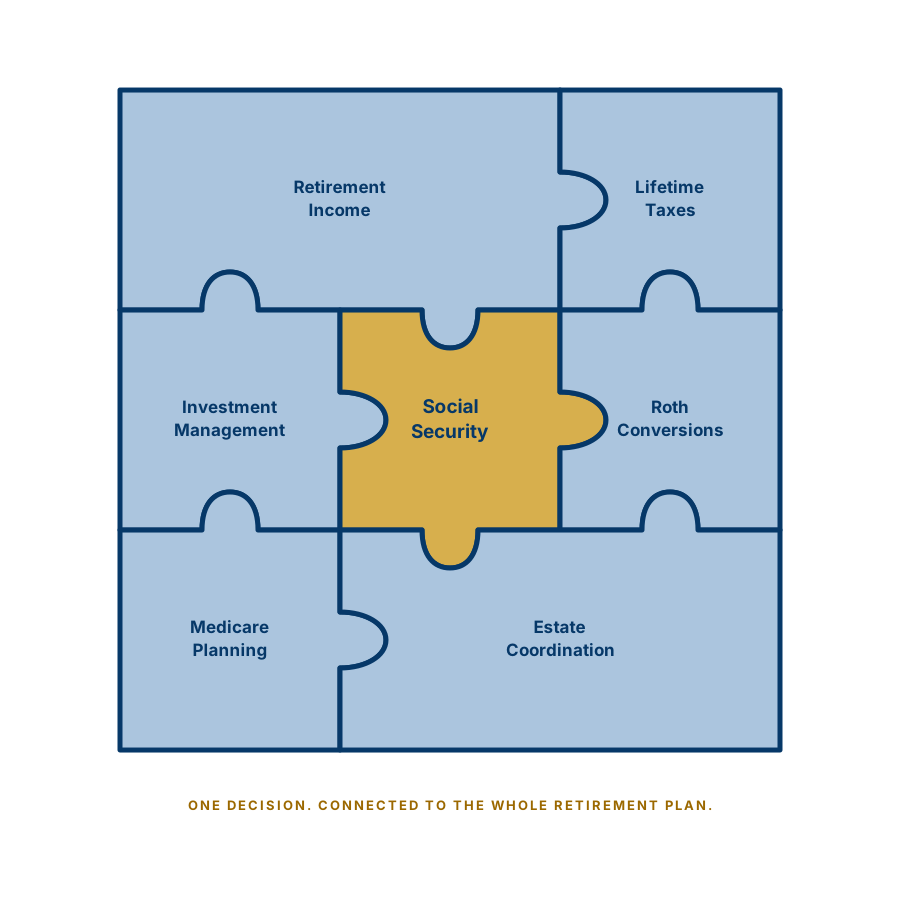

Seven-piece puzzle showing Social Security connected with retirement income, lifetime taxes, Roth conversions, investment management, Medicare planning, and estate coordination

The Integrated Retirement Review

See How Your Social Security Decision Fits With Everything Else.

One Decision. Decades of Impact.

Your Social Security claiming strategy deserves more than a calculator. During your Integrated Retirement Review, we’ll evaluate how it coordinates with retirement income, lifetime taxes, Medicare, portfolio withdrawals, and spousal and survivor benefits—so the decision supports your full retirement strategy.

Schedule Your Integrated Retirement Review →